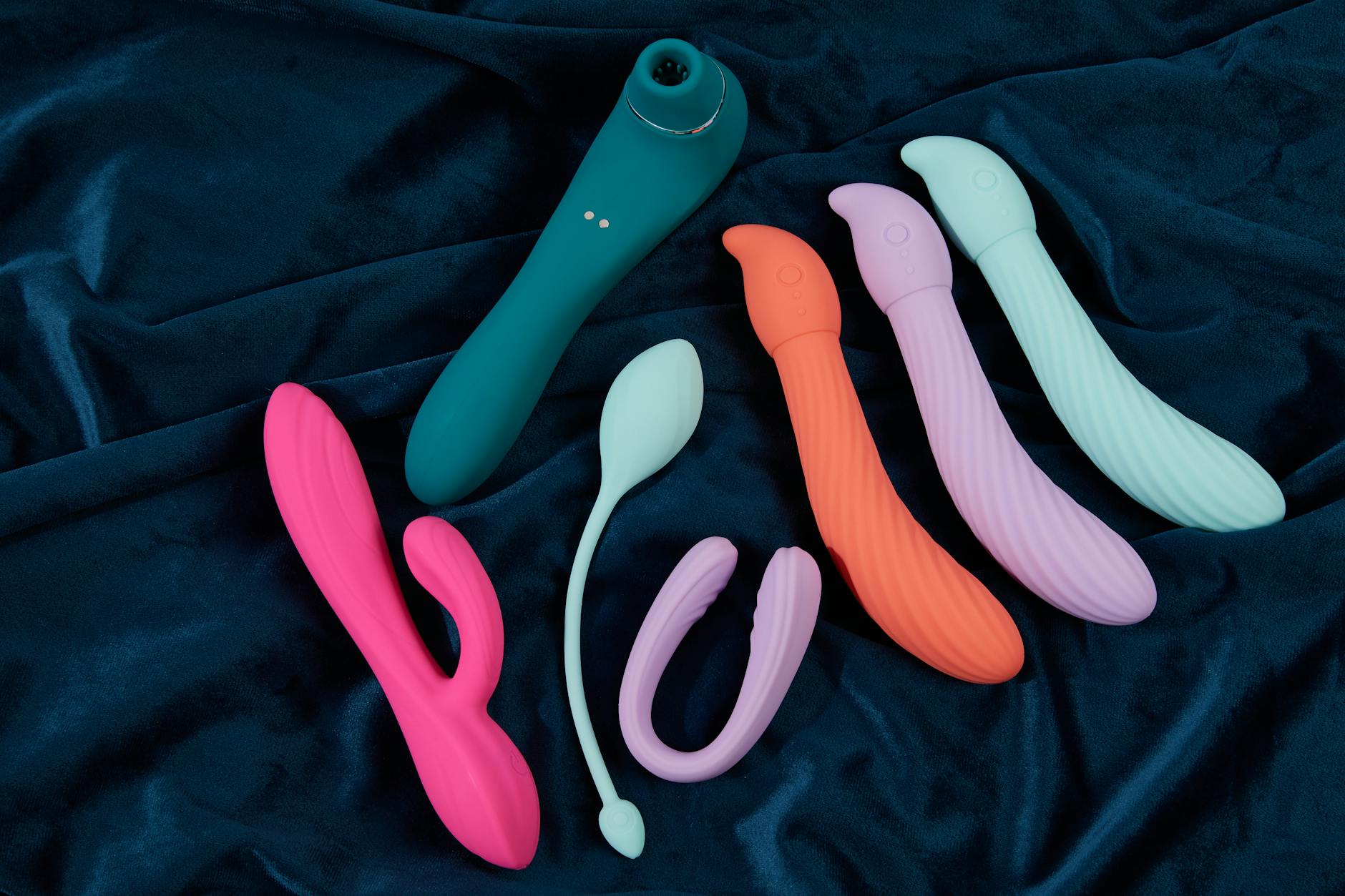
How Lemon Vibrators Compare to Traditional Vibrators for Clitoral Stimulation
Suction feels nothing like vibration. Here's exactly what that difference means for your body, your pleasure, and which approach might work better for you.
If you've been thinking lemon vibrators are just a different style of the vibrators you already know, I need to stop you. A lemon clitoral vibrator uses suction technology, not vibration. That's not a minor difference. It's the difference between shaking and gentle pulling, and your body absolutely feels it.
Most people discover this accidentally. They buy a lemon sucker expecting a faster, fancier vibrator. Then they use it and think, "Oh. This is... something else entirely."
Traditional vibrators work via rapid back-and-forth or circular motion. Think of it as external tremor transmitted through silicone to your skin and the nerve endings underneath. This works. Generations of people have had orgasms with vibrators.
But here's what's actually happening neurologically. Vibration stimulates a specific type of nerve receptor called Meissner's corpuscles, which are sensitive to light touch and texture changes. Vibration also creates some pressure variation, which activates deeper tissue receptors.
The sensation is constant and rhythmic. You feel buzzing. The intensity builds in a pretty linear way. Faster speed equals stronger sensation. Slower speed equals gentler sensation. You're always in control of that dial.
Suction operates on a completely different principle. Instead of vibrating against your skin, it creates a small pocket of gentle negative pressure that softly pulls on the clitoral area. This is closer to how oral sex creates sensation than how a vibrator does.
That suction activates different nerve clusters. You're engaging Pacinian corpuscles, which respond to sustained pressure and pressure waves rather than surface vibration. The stimulation is gentler in some ways, more concentrated in others. You're not feeling a buzzing sensation. You're feeling a kind of rhythmic pulsing pull.
The intensity doesn't just go up and down with speed. Instead, it builds and releases in waves. Many people report that suction feels like their body is being "drawn" rather than "shaken," and that distinction matters for how arousal develops.
Here's where individual bodies matter. Some people's clitorises respond better to vibration because they like direct, constant stimulation. Others find vibration too intense or even irritating because it doesn't allow for variation in sensation.
Lemon clitoral vibrators are often preferable if you have high clitoral sensitivity or if traditional vibrators have ever felt too abrasive. The suction approach is gentler on tissue while still creating strong sensation. You're not pressing a buzzing object directly onto a sensitive area. You're creating a seal that generates sensation through air pressure instead.
If you're coming back to pleasure after a long break, or if your sensitivity has shifted over the years, a lemon vibrator often feels more comfortable as a reentry point. The sensation is novel enough that it doesn't trigger the numbness that sometimes comes with returning to a toy you used frequently years ago.
This is where people get surprised. The type of stimulation changes how the orgasm builds and feels.
With traditional vibrators, orgasms tend to be faster to arrive and often feel sharp or localized. You get there, you go hard, it's over. That's not a criticism. Many people love that trajectory. But it's what you're getting.
With suction toys like the Lem, orgasms often build more gradually. The sensation intensifies in waves rather than linearly. Because the stimulation isn't constant buzzing, your nervous system doesn't adapt to it as quickly, so the pleasure plateaus less frequently. People often report that suction-based orgasms feel fuller, more radiant, longer-lasting. The intensity doesn't spike as high, but the duration extends.
It's the difference between a lightning bolt and sunrise. Both are pleasure. They just feel different and happen on different timescales.
When you're using a lemon vibrator with a partner, the dynamic shifts. Because suction doesn't create vibration throughout your partner's hand or the toy itself, there's no buzzing against your partner's body. The sensation is localized and quiet. If your partner is close to you, they might feel gentle movement, but nothing jarring.
Traditional vibrators create vibration that travels into your partner's hand, your partner's body if they're close, sometimes even into your partner if you're connected. Some couples love that added stimulation. Others find it distracting or uncomfortable.
With a lemon sexual toy, your partner can be completely integrated into the pleasure without their own body being overstimulated by the toy's mechanism. This makes suction toys particularly useful if you're exploring pleasure with a partner who finds vibration annoying, or if you want the toy to be invisible in some way.
Your nervous system adapts to repeated stimulation. This is normal. It's called habituation, and it's one reason people sometimes feel like toys "stop working" after a while.
Because lemon vibrators use a fundamentally different sensation than traditional vibrators, they can reactivate pleasure pathways that have gone quiet from overuse of a similar toy. This isn't special magic. It's just neurology. Your sensory system hasn't adapted to suction the way it's adapted to vibration.
If you've been using traditional clitoral vibrators and noticed that sensation building has slowed down, switching to a lemon clitoral vibrator can feel like turning sensation back on. Your body feels novel stimulation again, and arousal builds differently because the input is different.
Traditional vibrators often deliver more intensity per battery charge because they're running a motor continuously. That motor also drains faster under heavy use.
Lemon suckers like the Lem typically have longer battery life because the suction mechanism uses less power than a high-speed vibration motor. You're looking at potentially 2.5 to 3 hours of use per charge instead of 1 to 1.5 hours with some traditional vibrators. That's a practical difference if you're using a toy regularly or if you travel and want to charge less frequently.
Lemon vibrators are not cheaper than traditional vibrators. Entry-level traditional vibrators start around $30 to $50. A quality lemon suction toy typically runs $65 to $89. You're paying more for the engineering and the different sensation experience.
Is it worth the cost? That depends on whether the sensation actually serves your body. If you've tried traditional vibrators and felt like something was missing, or if your body doesn't respond well to vibration, then yes. If you're happy with what you have, there's no obligation to upgrade.
Honestly, the answer is: whichever matches your body's actual preferences, not the marketing.
Choose traditional vibration if you want fast-building, sharp intensity. Choose suction if you want gradual, wave-like buildup. Choose suction if vibration has felt too harsh or too irritating. Choose vibration if you're seeking that peak intensity quickly. Choose a lemon clitoral vibrator if you've hit a pleasure plateau with other toys and want to wake up sensation again.
Most people who explore both end up keeping both. They serve different moods and different moments. One isn't "better." They're just different, and your body will tell you which difference matters to you.
Traditional vibrators use motor-driven buzzing or shaking. Lemon suction toys create gentle negative pressure that pulls rather than vibrates. The sensation is fundamentally different and activates different nerve responses.
Often yes. Because suction uses a different nerve pathway than vibration, your body's habituation to traditional vibrators doesn't necessarily transfer. A lemon clitoral vibrator can feel completely novel even if you've used vibrators for years.
Yes. In fact, many couples find that suction toys integrate better into partnered sex because there's no buzzing transmitted to the partner's body. The toy works silently and the sensation stays localized.
Not universally. Some people have better orgasms with suction. Others prefer vibration. Your body is the deciding vote. Both approaches work. They just feel different and build differently.
No. Think of them as different tools for different jobs. Most people who explore both keep both. They offer different sensations and work better in different contexts.
Suction doesn't feel less intense. It feels different. The intensity builds and sustains differently. It's not sharper, but it's often more full and longer-lasting. Peak intensity varies, but overall satisfaction is often deeper.
The real answer is that both traditional vibrators and lemon clitoral vibrators work. They work differently. Your pleasure matters, which means trying what actually serves your body instead of what the marketing promises works for everyone.
If you're curious about how a different approach to clitoral stimulation might change your experience, start with what feels most comfortable. You can always explore other resources about pleasure and pleasure tools as you figure out what actually works for you.
Your sensations are valid. Your preferences are data. Listen to them.