Let's talk about what hormones actually do to desire
Your brain chemistry doesn't just influence arousal. It is arousal. When hormones shift, desire vanishes not because you're broken or losing interest in your partner. It's neurobiology. Dopamine drops. Testosterone declines. Estrogen fluctuates. The result is a flattening of interest that feels completely disconnected from how you felt months ago.
This happens more often than you'd think. Birth control changes. Hormonal IUDs. Thyroid medication adjustments. Perimenopause creeping up earlier than expected. PCOS. Stress hormones chronically elevated. Any of these can tank your arousal in ways that feel impossible to fix with willpower alone.
Here's the thing nobody tells you clearly: rebuilding desire when hormones have suppressed it requires a different approach than enhancing desire that's already present. And lemon vibrators, specifically, are weirdly good at this.
Why hormonal shifts suppress arousal in the first place
Think of testosterone as the gas pedal for sexual interest. It's not just a male hormone. People with vulvas produce it too, and it's one of the primary drivers of spontaneous desire. When testosterone drops even slightly, the entire interest pathway quiets down.
Estrogen is more complicated. Rising estrogen usually increases vaginal lubrication and tissue sensitivity. But fluctuating estrogen, especially when it swings wildly, creates confusion in the nervous system. Your body doesn't know if it's supposed to be turned on or stressed.
Then there's dopamine. This neurotransmitter is the anticipation chemical. It makes you want things, including sex. Hormonal birth control can suppress dopamine. Stress hormones (cortisol) actively interfere with it. Thyroid dysregulation messes with dopamine signaling. The result is a flat, boring existence where even things you used to enjoy feel pointless.
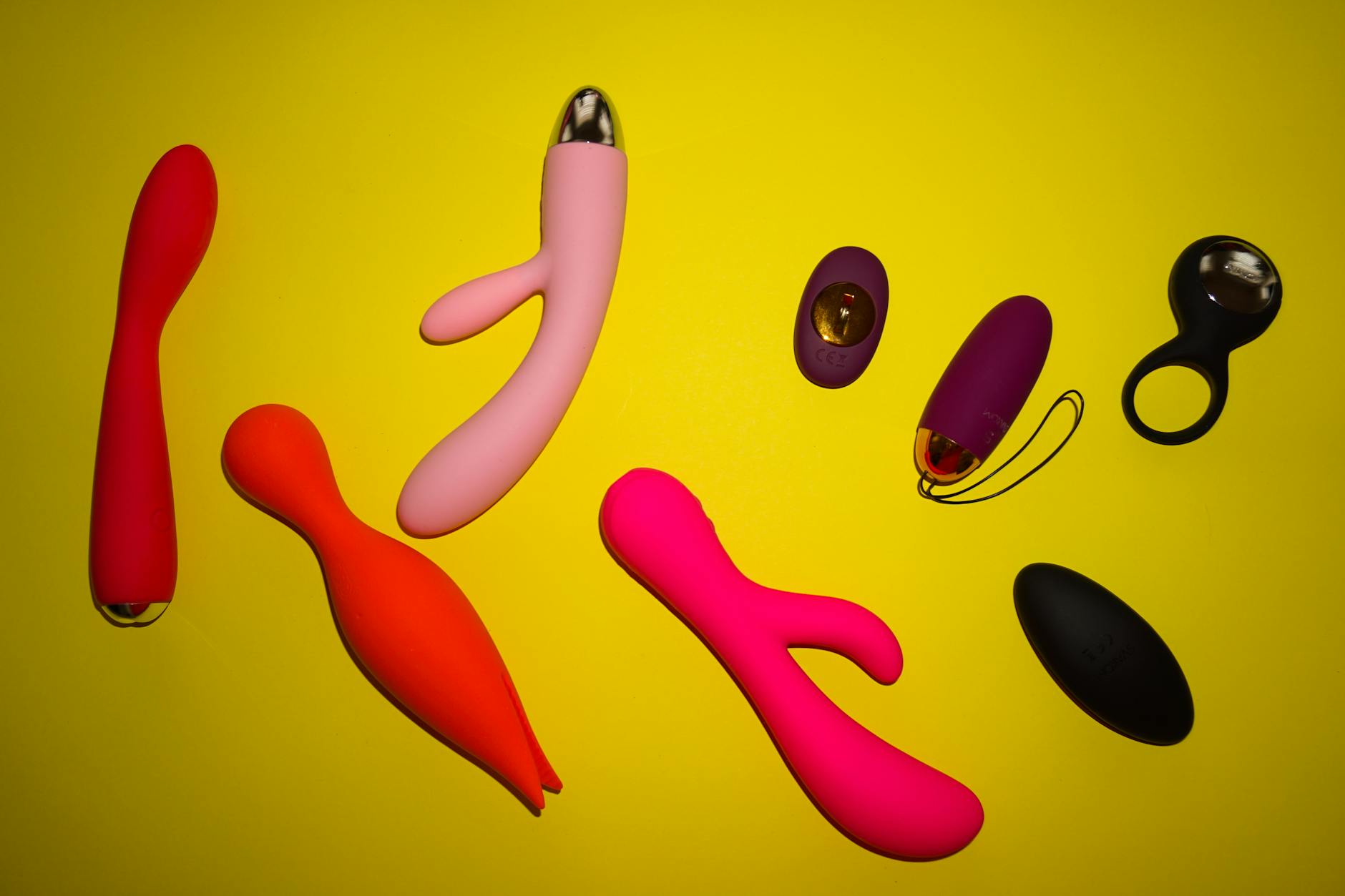
Photo by FounderTips on Pexels
When arousal is suppressed, your nervous system isn't primed to respond to traditional stimulation. You need something that works with the nervous system's current state, not against it. That's where the design of lemon clitoral vibrators becomes relevant.
How lemon vibrators work differently when desire is low
Most vibrators use continuous vibration. They're good once arousal is already building. But when hormones have flattened desire, continuous stimulation often feels like pressure rather than pleasure. Your tissues might respond, but your brain doesn't register it as interesting.
Lemon vibrators, like the Lem, use rhythmic pulsing and suction patterns instead. This pattern-based approach does something different neurologically. The rhythm keeps your brain engaged. The changes in sensation hold your attention. It's like the difference between reading a page of text and having someone tap on your shoulder unpredictably. One is easy to ignore. The other demands attention.
For people with suppressed desire, that neurological engagement is the first domino. If your brain isn't interested, your body's arousal response won't fully activate. Rhythmic stimulation from a lemon sucker creates a feedback loop. The pattern engages your brain. Your brain signals interest. Interest creates arousal. Arousal follows.
Starting patterns when arousal feels absent
Here's what I recommend to clients dealing with hormonal suppression of desire:
Start with patterns 1 through 3 on the Lem. These are the slowest, most rhythmic settings. Spend 5 to 10 minutes with just pattern 1. Yes, that long. The point isn't orgasm yet. The point is retraining your nervous system to register pleasure as interesting. Your brain has been in a dopamine desert. It needs time to remember that sensation can be compelling.
Don't expect immediate arousal. That's the trap people fall into. You'll use the vibrator for two minutes, feel nothing, and assume it's broken or you're broken. You're neither. Your nervous system just needs a longer runway.
After 5 to 10 minutes with pattern 1, move to pattern 2. Spend another 5 to 10 minutes there. Notice the difference. This is where the neurological engagement starts. Your brain is registering the change as interesting, even if the sensation itself isn't overwhelmingly pleasurable yet.
Then pattern 3. Then you can speed up if you want to, but honestly, many people with suppressed desire find they prefer staying in these lower patterns for longer.
The dual role of foreplay when hormones have suppressed desire
When desire is naturally low due to hormonal shifts, foreplay becomes more important, not less. But it needs to work differently.
Traditional foreplay assumes some baseline interest already exists. The goal is to build on that. When hormones have suppressed desire, there's no baseline to build on. You need foreplay that creates interest from scratch.
This means sensations unrelated to the genitals become crucial. Skin contact. Temperature. Sound. Texture. A partner touching your neck, your inner arm, your ear. Not as foreplay leading to genital stimulation. As the main event that primes your nervous system to be capable of pleasure.
Then, when you introduce the lemon clitoral vibrator, your nervous system is already slightly activated. The contrast between partner touch and vibrator sensation registers as interesting rather than boring. The rhythm draws attention. This is the setup that actually works.
Timing and consistency matter more than intensity
When hormones are suppressed, intensity is usually counterproductive. Your tissues might feel numb or unresponsive. Adding more force doesn't fix numb. It just adds pressure.
Consistency does fix it. Using the lemon vibrator for 10 to 15 minutes every other day for two weeks teaches your nervous system that pleasure is available and interesting again. The nervous system is neuroplastic. It adapts. But adaptation requires repetition.
I recommend treating it like a recalibration ritual rather than a performance goal. No orgasm deadline. No partner pressure. Just 15 minutes of exploring what sensation feels like when hormones have flattened everything. Some days you'll feel more. Some days less. That variance is actually good. Your nervous system is relearning how to respond.
When medication is the culprit
If your desire suppression started after a medication change, talk to your prescriber about the timing. Sometimes the body adapts after 4 to 6 weeks. Sometimes it doesn't.
Birth control and SSRIs are the two most common offenders. If your BC or SSRI is tanking desire, the options are: wait for adaptation, try a different formulation, adjust the dosage, or explore additional support like testosterone therapy in some cases.
While you're figuring out the medication piece, using a lemon vibrator isn't about forcing pleasure. It's about maintaining your nervous system's capacity for pleasure. Use it regularly. Keep the pathways open. Then, when hormones stabilize (whether through medication adjustment or time), your arousal response will be there waiting.
The Partner Piece
If you're partnered, this matters: your partner needs to understand that suppressed desire isn't rejection of them. It's a nervous system state. They can help by removing performance pressure, creating sensory experiences unrelated to sex, and being genuinely curious about what you're learning about your body during this recalibration.
Using a lemon vibrator with a partner present, early in the process, can be useful. Not performative. Just them sitting nearby, touching your arm, creating safety while you relearn arousal on your own timeline. This signals that pleasure is something you're in together, not a solo performance you're failing at.
FAQ
How long does it take to rebuild desire when hormones have suppressed it?
It depends on the cause. If it's medication-related and you switch medications, sometimes desire returns within 3 to 4 weeks. If it's perimenopause or hormonal shifts without an obvious trigger, it can take 8 to 12 weeks of consistent recalibration. The key is not expecting fast results. Your nervous system has been in low-dopamine mode. Rebuilding takes time.
Can a lemon vibrator alone fix hormonal desire suppression?
No. The vibrator is a tool, not a cure. If desire suppression is medication-related, you may need to address the medication. If it's hormonal imbalance, you may need testing and possibly treatment. The lemon vibrator's role is to keep your arousal pathways active while you address the root cause. It prevents the additional damage that comes from avoiding pleasure entirely.
Is it normal to feel nothing with a lemon vibrator when hormones are low?
Completely normal. Numbness is part of hormonal suppression. The point of using the vibrator regularly is to train sensation back in. You're not looking for immediate pleasure. You're rewiring your nervous system's response patterns. This takes weeks, not days.
Should I use the lemon vibrator solo or with a partner?
Both have value. Solo use lets you explore without performance pressure. Partner-inclusive use creates safety and keeps intimacy active while you're rebuilding. Start solo to get comfortable with the patterns. Then, once you feel some response returning, bring your partner in if that appeals to you.
What if desire doesn't return after consistent use?
If you've been using the lemon vibrator regularly for 12 weeks and desire hasn't improved, the suppression likely has a medical cause that needs treatment. Talk to a doctor who specializes in sexual health or an endocrinologist. Thyroid issues, PCOS, hormonal imbalance, and vitamin deficiencies can all suppress desire and need clinical intervention.
Can hormonal birth control be replaced with something that doesn't tank desire?
Sometimes. Non-hormonal options include copper IUDs, condoms, and barrier methods. Some people find they tolerate certain BC formulations better than others. A gynecologist who takes sexual health seriously can help you navigate options. The Lem can help during the process, but it's not a substitute for finding BC that works for your body.
Moving forward
Hormonal suppression of desire is frustrating because you know what arousal felt like before. You're not learning pleasure for the first time. You're relearning it after your nervous system forgot. That's a different process, and it requires patience.
Lemon clitoral vibrators help because they engage your brain neurologically while your hormones are in flux. They're a bridge back to pleasure while you address the root cause, whether that's medication adjustment, hormonal testing, or simply time.
Start slow. Commit to consistency over intensity. Trust that your nervous system can recalibrate. And if desire still hasn't returned after a genuine effort, get professional support.
Want help thinking through your specific situation? Get in touch.
Sources
Spencer, A. L., Eakle, R., & Thompson, A. (2017). Cerebral Sinus Venous Thrombosis and Hormonal Contraception in the Outpatient Setting. AJR American Journal of Roentgenology, 208(3), 652-658.
Fabio Basile, J. B., & Katz, V. L. (2015). Infertility, Reproductive Endocrinology, and Perimenopause. Clinical Obstetrics and Gynecology, 58(4), 732-745.
Goldstein, I. (2000). Female Sexual Arousal Disorder: New Insights. International Journal of Impotence Research, 12(Suppl 4), S152-S157.
Barrett-Connor, E. (2013). Hormones and Heart Disease in Women: Heart and Estrogen/Progestin Replacement Study Follow-up. Circulation, 109(15), 1809-1812.