You're in bed. Your partner is there. And instead of feeling desire, you're thinking about whether you're taking too long, whether your body looks right from this angle, whether they're actually enjoying this, whether you should be further along by now. The pressure is so loud in your head that pleasure becomes basically impossible.
Performance anxiety is real, it's common, and it's not a personal failure. It's a nervous system response to perceived evaluation. And here's the part that matters for this conversation: a lemon vibrator doesn't fix the anxiety, but it fundamentally changes how your body responds to it.
When you're worried about performing, your sympathetic nervous system activates. That's your fight-or-flight response. Blood flows away from your genitals and toward your muscles and brain. Your clitoris doesn't swell. Lubrication doesn't happen naturally. Your body becomes literally harder to arouse because your system is in protection mode, not pleasure mode.
This isn't about being uptight or broken. This is neurobiology. The same mechanism that helps you run from danger also prevents your body from becoming sexually aroused when you feel evaluated or unsafe. Your nervous system is doing its job. It's just doing it at the wrong time.
Most conversations about performance anxiety focus on mindfulness or communication or being present. Those things help. But they often miss the physical piece: your body needs evidence that pleasure is possible before your brain will stop catastrophizing.
A clitoral vibrator like the Lem works because it gives your nervous system consistent, reliable stimulation without waiting for your brain to catch up. Here's what that means in practice.
When you use a lemon vibrator, you're not relying on arousal to happen first. The suction sensation activates your clitoral nerves directly, which sends a signal up to your brain: "Okay, something pleasurable is happening right now." Your brain can't argue with that. It's not a thought or a mindset shift. It's sensory data.
Once your nervous system gets that signal, something shifts. You stop waiting for arousal to happen and instead start experiencing it in real time. The anxiety about whether it's working loosens because you can literally feel it working.
If you're with a partner, the conversation matters more than the vibrator itself. Before anything happens, you might say something like: "I want to try something that helps me feel less in my head. I'm going to use a vibrator for part of this. It's not about anything missing from you or us. It's about me turning down the noise."
That's honest and clear. It shifts the framing from "I'm broken" to "I have a tool that works." Most partners respond well to that because it actually makes the experience better for them too. Someone who's worried about performing usually can't be fully present with their partner. Using a vibrator removes that barrier.
Timing: start with the vibrator solo or in early foreplay, before you're fully aroused. This is important. Don't use it as a rescue when things aren't working. Use it proactively to warm up your nervous system. That's a completely different experience than using it to fix something that went wrong.
Here's what doesn't help: switching on the Lem at the strongest setting and expecting instant orgasm. That's just performance pressure in a different costume.
Start at pattern 1 or 2. You're not trying to come. You're not trying to achieve anything. You're just exploring sensation. Keep it there for a few minutes. Let your nervous system register "this feels good, and I don't have to do anything to make it happen."
Then you can build. Move to patterns 3 or 4. Adjust the angle so you're getting stimulation where it actually feels best, not where you think it's supposed to feel best. That distinction is crucial. Performance pressure often means ignoring what actually turns you on in favor of what you think should turn you on.
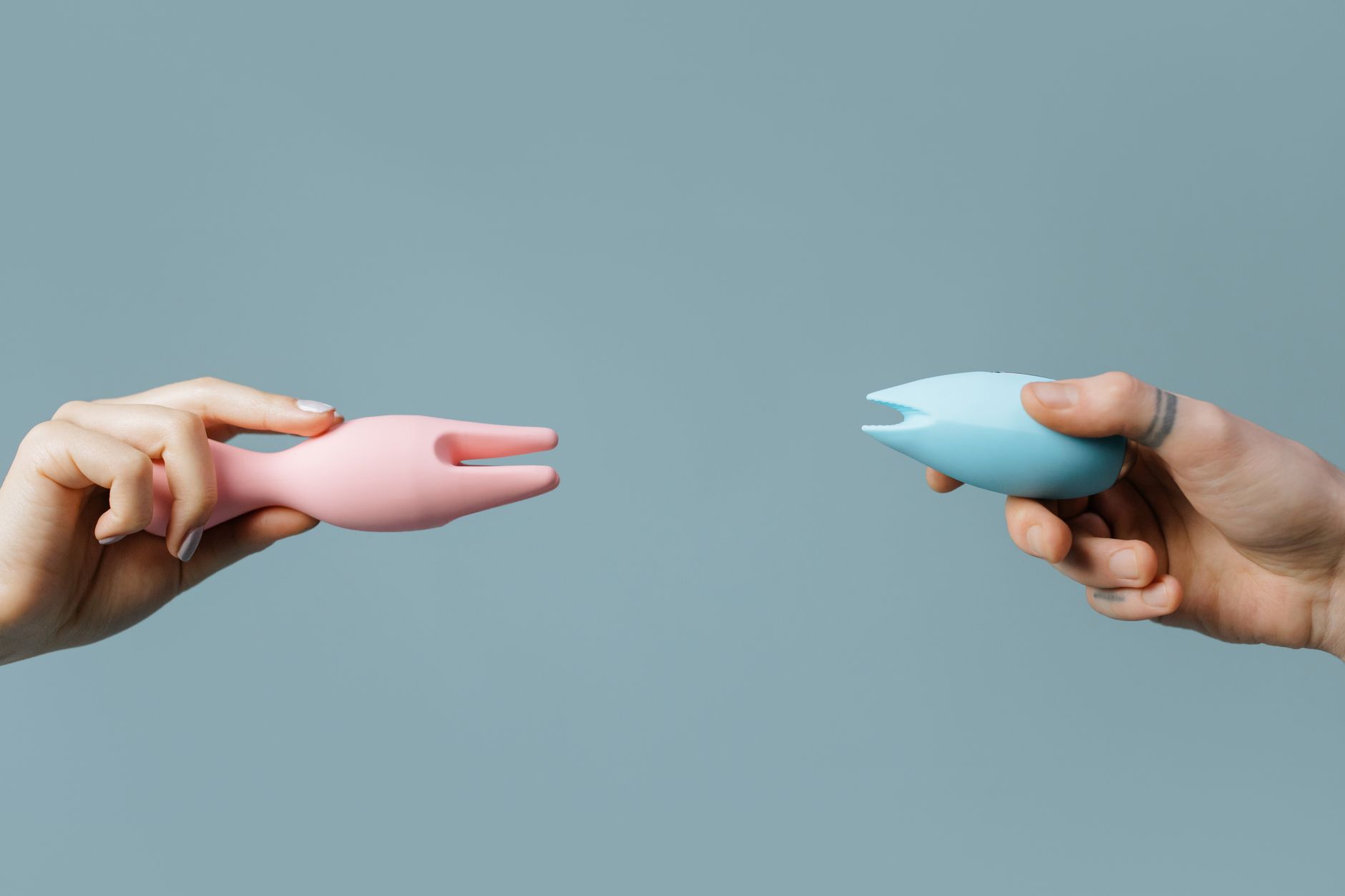
Photo by cottonbro studio on Pexels
If you're with a partner, they can be involved in this however feels comfortable. They might use the lemon vibrator on you. You might use it yourself and let them touch you elsewhere. There's no rulebook. The point is that the vibrator is removing the pressure on you to orgasm through one specific kind of stimulation. That opens up everything else.
In my practice, I work with people on performance anxiety constantly. What I see happen when they add a clitoral vibrator is that they start distinguishing between the anxiety and the sensation. Before, they were fused. Everything was mixed together.
The vibrator creates a separation. You can notice the anxiety without it shutting down pleasure. You can be in your head about something and also feel your body responding. Those two things can exist at the same time, and the body usually wins.
That's not magic. That's just how sensation works. Strong physical feedback overrides weak cognitive noise. Give your clitoris a consistent, pleasurable stimulus and your nervous system will prioritize that signal over the worry.
After a few times of using a lemon vibrator when performance pressure shows up, something changes. You start to trust that your body can feel good regardless of the narrative running in your head. That trust is the real tool. The vibrator just proved it to you first.
Eventually, many people find they need the vibrator less often. Not because they outgrow it, but because they stopped needing the external proof that pleasure is possible. That's when it becomes a choice rather than a necessity, which is a completely different experience.
If you've been struggling with pleasure intensity that feels unpredictable, a lot of that unpredictability traces back to this exact thing: your nervous system tightening when it perceives evaluation. A lemon vibrator gives your body the physical proof it needs to relax.
People often worry that using a vibrator means their partner isn't enough. That's the performance anxiety talking. A clitoral vibrator doesn't replace your partner. It just ensures your nervous system is calm enough to actually feel what your partner is doing. For a lot of couples, adding a vibrator actually improves the experience for both people because suddenly one person isn't carrying the silent burden of trying to perform.
Another worry: if I use a vibrator now, will I always need one? Not necessarily. Some people find they prefer it. Some people use it sometimes. Some people use it to reset their nervous system and then don't need it for a while. There's no wrong answer. The lemon vibrator is a tool, not a dependency.
It doesn't eliminate the anxiety, but it bypasses it. When your clitoris is receiving strong, consistent pleasurable stimulation, your nervous system prioritizes that signal over the worry. This separation between thought and sensation is what allows arousal to happen despite the anxiety. Over time, your brain learns that pleasure is possible even when you're a little nervous, which gradually reduces the intensity of the performance pressure itself.
Solo, you get to explore without any external observation, which can actually be the fastest way to rebuild trust in your own arousal. With a partner, the conversation beforehand matters more than the vibrator itself. Being clear about why you're using it removes the fear that your partner will interpret it as a criticism. Both approaches work. The key is that the vibrator is removing pressure, not creating a new performance stage.
Most people notice a shift within three to five sessions. Not because the vibrator fixed anything, but because it gave them consistent evidence that their body can feel good. That evidence compounds. The first time feels like "okay, this works." By the fifth time, it feels like "I can trust my body again." If you're not noticing anything after a few tries, the angle or pressure might be off. Adjust and experiment rather than assuming it's not for you.
Tell them first. A vibrator showing up mid-intimate-moment can feel like a criticism, even if that's not what's happening. A five-minute conversation before is so much better. You might say something like: "I've been in my head during sex, and I want to try something that helps me be more present. I'm going to use a vibrator. It's not about you. It's about me getting out of my own way." Most partners hear that and feel relief because suddenly they're not carrying the burden of your self-doubt.
Yes, and it often helps more in those situations. If medication is dampening your arousal, a strong external stimulus like a clitoral vibrator can be the bridge that reconnects you to sensation. You might also want to talk to your prescriber about whether timing medication differently could help, but the vibrator is a practical immediate tool.
That's performance anxiety dressed up as guilt. Your partner probably wants you to feel good. Using a vibrator doesn't mean your partner isn't enough. It means you're removing an obstacle to experiencing them fully. Frame it that way. Most of the time, partners are relieved because suddenly they're not responsible for fixing your pleasure or managing your anxiety. That's a burden that should never have been on them anyway.
Performance pressure is ultimately about believing you need to earn pleasure or prove something through sex. A lemon vibrator doesn't philosophically change that belief. But it does something more useful: it gives your body a repeated experience of pleasure that happens because of sensation, not because of performance. That experience, repeated a few times, starts to rewire how you approach the whole thing.
You deserve pleasure that doesn't come with a scorecard. A lemon clitoral vibrator just makes that easier to remember.