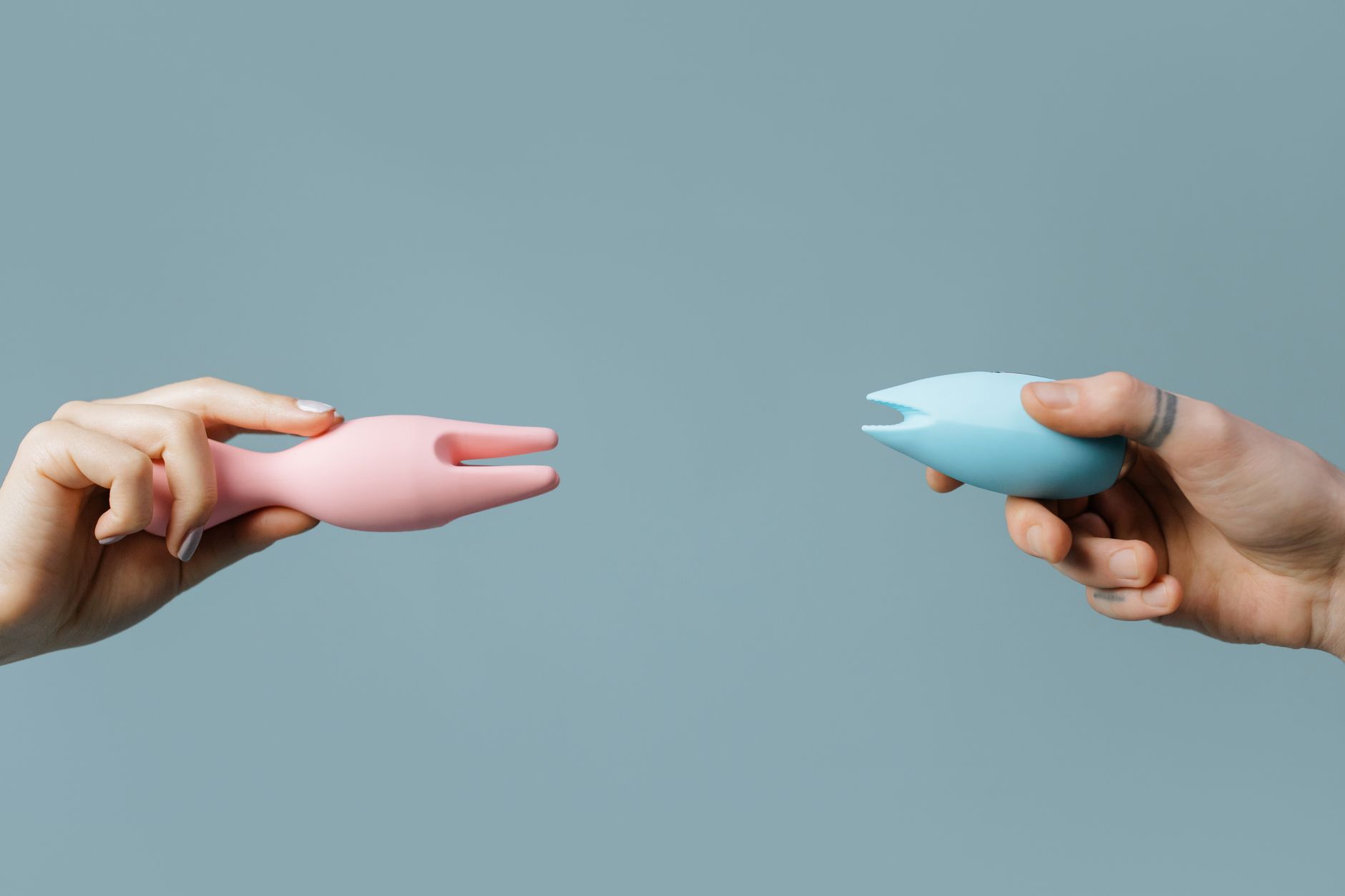
Honestly? This is one of the most common relationship friction points I see in my practice. One partner has a clitoral vibrator they love. The other partner finds the idea anywhere from mildly weird to deeply threatening. You're not broken. They're not prudish. You're just at different starting points, and that's completely workable if you know how to navigate it.
Here's what usually goes wrong. One of you brings it up mid-sex, or casually mentions it, or just produces a lemon vibrator expecting enthusiasm. The other person hears it as "You're not enough for me" or "Something's wrong with what we're already doing." Both of you feel misunderstood. The toy gets shoved back in a drawer. Three months later, you're both frustrated and the topic feels radioactive.
It doesn't have to go that way. But it requires a different conversation entirely.
Start outside the bedroom. Not on the couch five minutes before sex. Not when you're frustrated. Pick a calm moment, maybe during a walk or over coffee, and separate the two conversations that usually get tangled.
First conversation: "I want to talk about my pleasure, and I value your feelings about this." Not: "I want to use a toy during sex." That second phrasing makes it about the toy. It makes your partner defensive because it sounds like you're trying to change the existing dynamic.
Instead, lead with curiosity about them. "What's your actual concern here?" Listen. Really listen. Common worries sound like this:
"I feel like you're replacing me."
"I don't know how to use it, and I'll feel stupid."
"My exes suggested this and it felt like pressure."
"I grew up thinking this meant something was wrong with the relationship."
"I'm worried it'll change how sex feels."
Each of those is a real concern, and none of them are solved by "No, it's fine, it's normal." That's dismissive. Instead, you address the actual fear.
1. Let them watch you first. Not during sex. Actually, the opposite. You using a lemon vibrator alone, while they watch (if they want to), completely reframes the story. It's not about what the toy does for you with them. It's showing them you enjoy your own body. That's not threatening. That's hot. And it strips away the performance pressure because you're not asking them to do anything yet. You're just existing in your own pleasure. Many partners feel completely different about a toy after they've watched their person use it solo. The story shifts from "They want something more than me" to "Oh, I get to see them really enjoy themselves."
2. Start with their hands and patience, not the toy. Some partners need to feel essential first. Use the lemon vibrator together, but they control the tempo. They hold it. They decide when it moves and how fast. You're still the expert on your own body, but they're driving the experience. This is not a real solution long-term, but it's a bridge. It makes them feel active and necessary. After a few sessions like this, many partners want to step back and let you take the lead.
3. Reframe solo exploration as foreplay for the relationship. "When I know what I like, I'm more present with you. I'm more confident. I come faster and easier, and that means better sex for both of us." This is literally true. And when your partner understands that your solo pleasure is an investment in your shared sex life, it stops feeling like a competing priority.
Assuming your partner moves from "No way" to "Okay, I guess we can try this," the actual mechanics matter. Here's what helps:
Start low and slow. A lemon vibrator on setting 1 against your vulva is not the same intensity as what they imagine. Watching you respond to a gentle pattern is often the turning point. They see you relax, or smile, or catch your breath. That visual is what changes their mind. So lead with the gentler settings, not the highest intensity.
Invite them into it. "Can you kiss my neck while I use this?" or "Tell me what you notice." or even "I like it when you watch." This isn't about the toy replacing them. It's about expanding what sex with them looks like. The lemon vibrator becomes part of your shared landscape, not a replacement.
Show them you still want them. This sounds obvious, but it matters. Some partners need explicit reassurance that you still crave their touch, their penetration, their specific presence. You're not saying "Toy sex is better." You're saying "I want both. This expands what we can do together."
Sometimes a partner's resistance isn't really about the toy. I've seen it mask deeper issues. Someone who was pressured in a past relationship. Someone who equates toys with infidelity. Someone whose own pleasure was never prioritized, so they have weird feelings about you prioritizing yours.
If your partner stays firmly resistant even after you've had these conversations, or if the resistance feels connected to control or shame, that's worth naming. You might say something like: "I hear that you're not comfortable with this right now. I respect that. But I also want to understand whether this is about the toy specifically, or about something bigger between us about pleasure or autonomy." That opens a different conversation. Maybe with a couples therapist. Maybe just with more time.
You don't have to sacrifice your pleasure to keep your partner comfortable. But you also don't get to steamroll their boundaries. The sweet spot is mutual curiosity. "I want this, and I care about your comfort. How do we figure this out together?"
Honestly? Sometimes it does. Some partners will never be thrilled about lemon vibrators in the bedroom. They might tolerate it. They might even watch you use it solo without complaint. But enthusiastic? Probably not coming.
That's a choice you get to make: Is the toy worth the ongoing tension? Is this relationship meeting your needs as it is? There's no right answer. I've seen couples thrive with compromises like "You use your vibrator solo, we don't use it together." I've also seen people realize that a partner who refuses to meet them on pleasure is showing them something important about the relationship.
What I haven't seen work is resentment. So if you go with a compromise, actually commit to it. Don't sneak the toy in when they're not looking. Don't use it and then feel ashamed and hide it. That creates distance in other ways.
Most new relationships have comfort gaps around something. For some couples it's toys. For others it's frequency, or positions, or fantasy sharing, or vulnerability. The couples I see thrive aren't the ones without friction. They're the ones who can name the friction, separate the real concern from the assumption, and move toward each other instead of away.
A lemon vibrator can absolutely be part of that conversation. But it's never just about the toy. It's about what the toy represents. Trust. Honesty. Your own body mattering. And whether you and your partner can navigate that together with kindness.
Lead with what you want, not what you're missing. "I love having sex with you, and I also want to explore this aspect of my pleasure." That's different from "I need this because sex with you isn't enough." The first is additive. The second is critical. Your partner's brain can tell the difference.
Not weird at all. You have a sex life before this person. What matters is honesty. "I have a toy I like. I'd love to include it when we're ready, and I want to know how you feel about that." Treating it like a normal part of your sexuality, not a secret, makes it way less charged.
That's actually a reasonable boundary. Some partners aren't comfortable witnessing toy use, even if they accept that it happens. You get to respect that boundary and still use the toy solo. The goal isn't to force them to watch or participate. The goal is that you get to explore pleasure, and you're not lying about it. That's already progress.
It can, but not automatically. The vibrator is a tool. What transforms sex is usually the conversation underneath it. When both partners can talk openly about pleasure, about what feels good, about what they want to try, that's what deepens intimacy. The toy is just the catalyst. If you can't have that conversation, the toy won't fix it.
There's no magic number. Some couples bring it up after two weeks. Others after two years. What matters is that you've had enough sex to know your bodies, enough conversations to trust each other, and enough foundation that the other person doesn't interpret it as rejection. Early in a relationship, there's so much novelty already. You don't need to add toys right away. But you also shouldn't hide your pleasure style forever.
Turn this all around. Listen to what they actually want. Ask them why a lemon vibrator matters to them. Let them show you their pleasure before you worry about what it means about you. Often, when we feel secure in our partner's desire for us, we feel way less threatened by their toys.
You deserve a partner who wants your pleasure. You deserve to explore your own body without shame. And your partner deserves to feel secure and heard, not pressured. Those things aren't in conflict. They just require honest conversations and patience. Start there, and the rest usually follows.