
Let's start with the thing nobody says out loud
You want to use the lemon vibrator during sex. Your partner isn't sure about it. Or maybe the reverse: they think vibrators are the way, and you feel more connected without one. This mismatch doesn't mean you're incompatible. It means you're human, and you have different pleasure maps. The thing is, most couples never actually talk about it clearly, which is how resentment starts.
I've worked with hundreds of couples where one person's ideal pleasure looked nothing like the other's. The ones who stayed connected weren't the ones with identical preferences. They were the ones who got curious instead of defensive.
Why different preferences feel threatening (and how to reframe it)
Here's what happens in most couples: One person suggests a lemon clitoral vibrator. The other person hears "you're not enough for me," even though that's not what was said at all. The first person hears "you're weird for wanting this," and suddenly nobody's happy.
The truth is simpler and less personal. Pleasure is neurological. What gets one person's nervous system lit up might leave another person cold. A clitoral vibrator creates a specific kind of stimulation. Suction intensity, pulse pattern, the exact spot on the clitoris. Your partner's preference for a different pace or sensation isn't a referendum on your body or your sexuality. It's just their nervous system working the way it works.
When you separate the physical preference from the emotional meaning, everything shifts. You're not trying to convince your partner that you're normal. You're not defending yourself. You're just solving a practical puzzle together.
Starting the conversation before things get tense
Don't bring it up mid-argument or mid-sex. Timing matters. Pick a calm moment when you're both clothed, fed, and relaxed. This isn't a negotiation where one of you needs to win. It's information gathering.
Start with curiosity about their preference, not justification of yours. "I've been thinking about trying a lemon vibrator during foreplay. I'm curious what you think about that," is different from "I need a vibrator because you're not doing it right." The first opens a conversation. The second triggers defense.
Listen for the actual concern underneath their answer. Sometimes it's "I feel replaced." Sometimes it's "I don't know how to use it with you." Sometimes it's "I'm worried about noise" or "I'm not comfortable with toys." Each concern needs a different answer.
The integration strategies that actually work
Here's what I recommend to couples where one person is excited about clitoral vibrators and the other is skeptical or neutral:
Make it collaborative, not solitary. Your partner using the lemon vibrator on you is wildly different from you using it alone in the corner. When they hold it, they're part of the experience. They're learning your body's response in real time. They're not being replaced. They're being included in something new. That shift alone changes the dynamic.
Start small and specific. Don't introduce the lemon vibrator as "the new way we're having sex now." Introduce it as one tool in one specific context. "During foreplay, while I'm on my back" or "at the exact moment before penetration." Boundaries make it feel manageable instead of like everything is changing.
Let your partner stay in control. They hold it. They choose when to use it. They decide the intensity and duration. If they feel like they're driving the experience, not watching from the sidelines, the dynamic shifts from "doing this to satisfy the other person" to "we're exploring together."
Build in feedback loops. After you use it, actually talk about it. Not a critique. Just "that felt good," or "I liked when you did X," or "let's try a different pattern next time." This turns it into a conversation, not a one-off experiment.
When your partner wants the lemon vibrator and you don't
Flip it: your partner is excited about clitoral vibrators and you're hesitant. Maybe you feel like it takes away from penetration. Maybe you're worried it means your fingers aren't enough. Maybe you just like the simplicity of bodies and don't want to add equipment.
Start with honesty about what feels threatening. Not as an accusation. As information. "I'm worried I'll feel replaced" is different from "you obviously think I'm not good enough." One is your feeling. The other is you making it their fault.
Then ask for specifics about what they want. Not all vibrator use looks the same. Maybe they want it used before penetration, to arrive already aroused. Maybe they want it alongside your fingers. Maybe they want it during a specific kind of foreplay that doesn't appeal to you otherwise. The details matter because they tell you whether this is about adding something or replacing something.
If you're genuinely uncomfortable, say that clearly. But also ask yourself whether you're uncomfortable because of the toy itself or because you're afraid of what it means. Those are different problems that need different solutions.
The lemon vibrator as a bridge, not a replacement
Here's what I see happen most often: One partner introduces a lemon clitoral vibrator. Instead of replacing the other person's touch, it creates a new kind of collaboration. They might use the Lem while simultaneously being inside you, or while you're kissing them, or while they're doing something else you love. The vibrator becomes part of the whole experience, not the whole experience itself.
This changes the conversation from "should we use a vibrator" to "how do we want to use it together." The second question has way more creative possibilities.
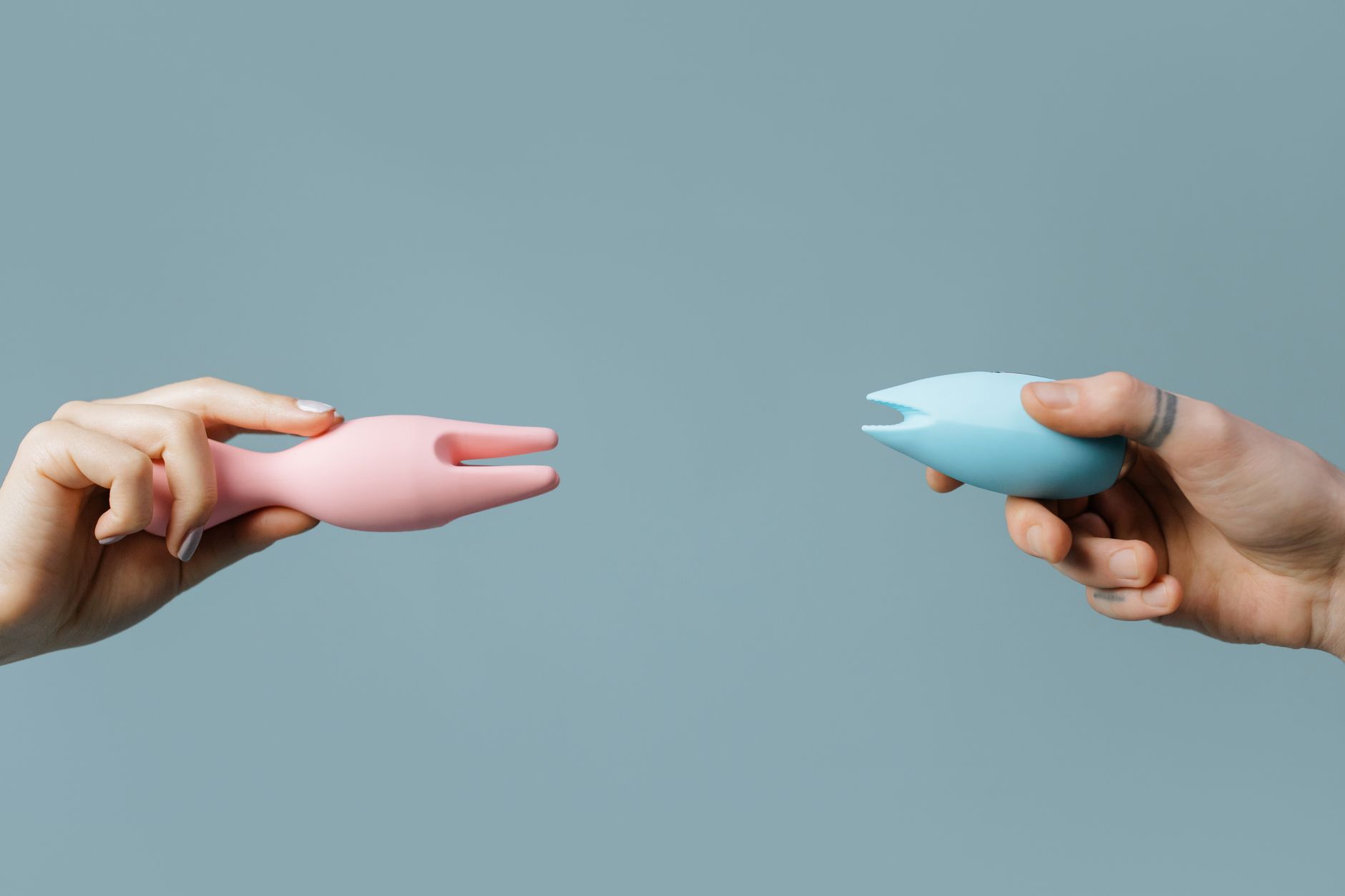
Photo by cottonbro studio on Pexels
Addressing specific partner concerns
Here are the concerns I hear most often, and what actually helps:
"It's too loud." Fair. Lemon vibrators have a sound profile. If noise is the issue, that's solvable. Use it during times when you're already making noise together. Use it with music playing. Use it when you have privacy. This is a logistics problem, not a relationship problem.
"I don't know how to use it." Also fair. Ask them what information would help. Do they want to watch you use it first? Do they want to practice with it during foreplay before partnered sex? Do they want a specific pattern recommendation? "I'm not sure how to hold it" is very different from "I don't want to try," and the first one is totally fixable.
"It feels clinical or unromantic." This one often needs conversation, not solutions. Sometimes your partner is grieving a version of sex that didn't include toys, and they need space to say that without being judged. Listen first. Explain your perspective second. Find the middle ground third. That middle ground might be "we use it sometimes, not every time" or "we use it in specific ways that feel connected to both of us."
"I'm worried you won't want me without it." This is deep and worth taking seriously. Reassure them that the vibrator isn't replacing them. Then show them. Continue touching them skin-to-skin during and after using the lemon vibrator. Keep them in the center of the experience. Let them see that the vibrator is an addition, not a subtraction.
When preferences stay mismatched (and that's okay)
Not every difference in sexual preference gets resolved into perfect agreement. Sometimes you use the lemon vibrator sometimes, and sometimes you don't. Sometimes your partner is warm about it instead of excited. Sometimes you've learned they genuinely prefer a different style of stimulation and the vibrator isn't going to change that. All of those outcomes are okay.
What matters is that you've talked about it, you've tried to understand each other, and you've decided together what works. Resentment happens when one person is silently wishing the other person wanted something different. Respect happens when you can say "we like different things" and then figure out how to honor both people.
The deeper pattern underneath
Different sexual preferences are usually just the surface of a deeper conversation about desire, control, vulnerability, and trust. The lemon vibrator is just the thing you're arguing about. What you're really negotiating is "do you see me," "do you respect what I want," and "can we work toward something that feels good for both of us."
If you can have that conversation about a vibrator, you can probably have it about bigger things. And if you can't yet, a sex therapist or couples counselor who specializes in intimacy can help you build the skills to do it. There's no shame in that. Most couples do better with outside support when sexual preferences diverge.
Practical next steps
If you're ready to try using a lemon vibrator with a partner who's uncertain, here's what works: Pick one specific time. Tell them what you want to happen. Use it. Then ask how they felt. Make it a conversation, not a test. Over time, partners who were skeptical often become curious. Partners who were resistant sometimes discover they like it. Partners who stay neutral often become more comfortable just because it's familiar now.
And if your partner genuinely doesn't want clitoral vibrators in your shared sex life, that's their right. Your right is to either accept that boundary or decide it's a dealbreaker. But you can't make that decision until you've actually talked about it, and most couples haven't.
FAQ
How do I know if my partner is uncomfortable with vibrators because of the vibrator itself or because they feel threatened?
Ask them directly, in a calm moment. "I'm noticing some hesitation about using a lemon vibrator together. I want to understand what's going on for you. Is it the vibrator itself, or is it something about what it might mean for us?" Listen without defending. Their answer will tell you whether you're solving a practical problem or an emotional one.
Can using a lemon clitoral vibrator together actually improve our sex life if we're really different?
Yes, but not because the vibrator is magic. Using it together gives you a reason to communicate about pleasure, to try something new as a team, and to stay curious about each other's bodies. Those things improve intimacy. The vibrator is just the excuse to do them.
What if my partner wants to use the lemon vibrator every single time and I'm not interested?
That's a preference mismatch that needs conversation. Are they addicted to the specific sensation? Do they worry they can't satisfy you without it? Do they just love it and want to share it? The reason matters. Once you understand it, you can negotiate. Maybe you use it half the time. Maybe you use it in a way that feels less central to the experience for you. Maybe you decide this is a real incompatibility and need to think bigger. But you can't decide until you know what you're actually negotiating.
Is it weird if my partner wants to use a lemon vibrator on me but doesn't want me to use it on them?
Not at all. Pleasure preferences aren't always symmetrical. Some people love giving vibrator stimulation and hate receiving it. Some people feel pressure to come when a vibrator is involved. Some people just like different kinds of touch. Your partner's preferences about their own body are their own. You get to have yours too.
How do I bring up the idea of a lemon vibrator without sounding like I'm criticizing their performance?
Frame it as something you want to explore, not something that's missing. "I've been curious about trying a lemon vibrator together" is different from "I need a vibrator because what you're doing isn't working." Specificity also helps. "During foreplay, I'd love to try air-suction stimulation" sounds like an exploration, not a complaint.
What if we try the lemon vibrator together and my partner hates it?
That's fine. You tried, you got information, and you move on. Don't push it. Don't assume they'll change their mind next time. If they hate it, they hate it, and that's data you can respect. There are plenty of other ways to build pleasure together that don't involve vibrators.
The goal isn't to get your partner to love everything you love. The goal is to stay connected while honoring both people's preferences. Sometimes that means using a lemon vibrator sometimes. Sometimes it means not. Both are okay as long as you've both chosen it.
If you're navigating preferences that feel too big to solve alone, reach out to a couples therapist or contact Nancy's Lem Shop for resources on communication and pleasure. We're here to help you find your way forward.