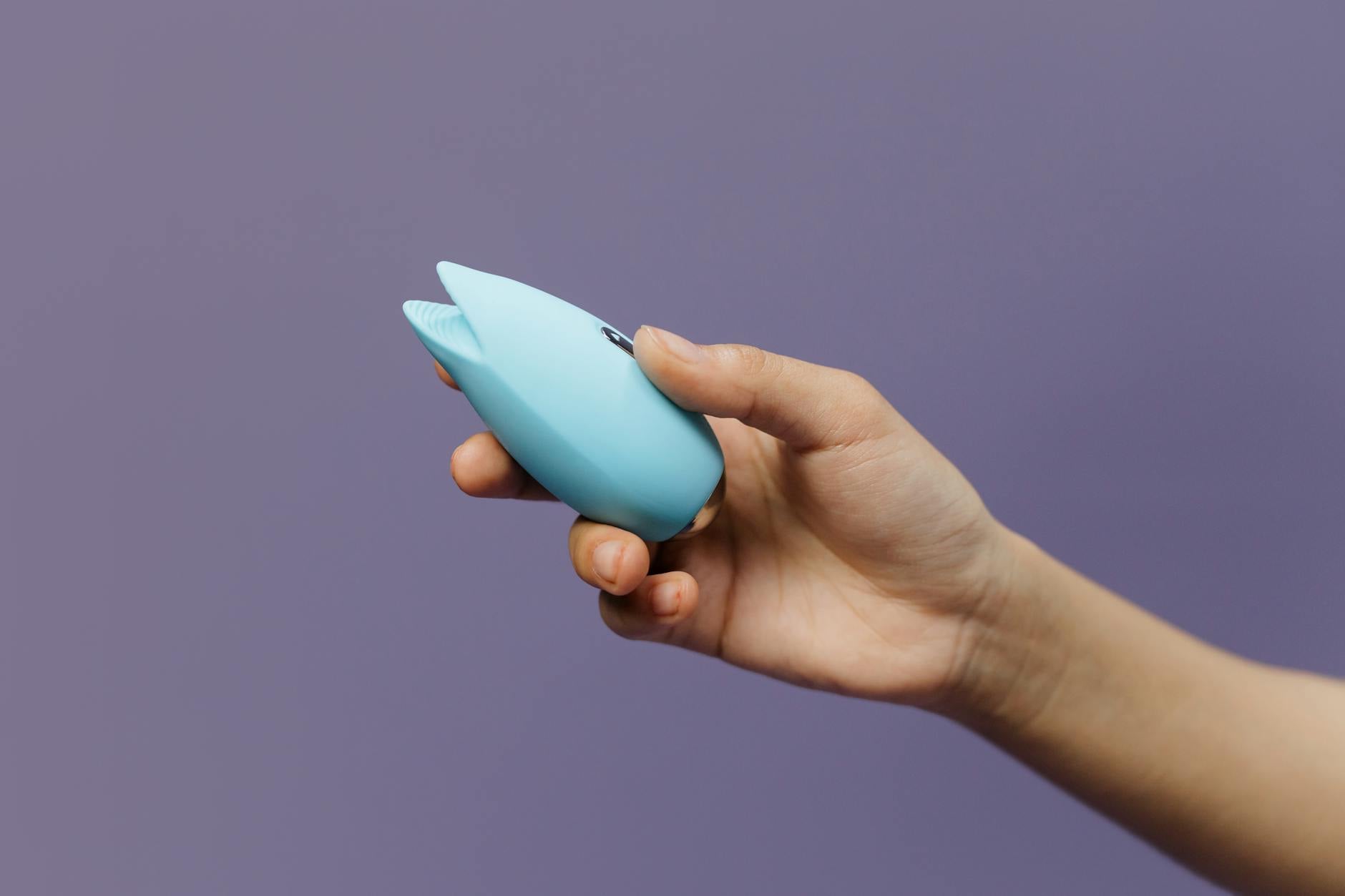
Lemon Vibrator When Partner Wants Quickies But You Need Buildup
One of you wants fifteen minutes. The other wants five. Here's how a lemon clitoral vibrator solves the most common timing mismatch in long-term relationships.
Your partner initiates. You're interested. But your bodies are running on different clocks. They're ready to go in five minutes. You need fifteen. Neither of you is wrong. You're just mismatched on buildup time, and that mismatch quietly kills desire for both of you.
What happens next is predictable. They start faster than you can catch up to. You feel rushed. You fake it to avoid the disappointment. They sense the fakeness. Resentment settles in. A lemon vibrator isn't the solution to every timing problem in a relationship, but it's a genuinely useful tool for this specific one.
Your arousal curve isn't the same as your partner's. That's not a flaw. It's neurology. Most vulva owners need a longer warm-up to reach the same arousal level as most penis owners, and that's before we factor in individual variation, stress, hormones, and relationship dynamics.
Everyone talks about foreplay, but fewer people talk about what happens when you're trying to shorten your own arousal timeline to match someone else's. That's not foreplay anymore. That's performance anxiety wearing a different name.
A lemon clitoral vibrator changes the equation because it accelerates the physical part of arousal without requiring your partner to do more work. Your clitoris gets consistent stimulation while they focus on whatever brings them pleasure. You're both working toward your own readiness, not negotiating a compromise timeline.
Here's what I see in my practice. Partners who want quickies aren't always trying to be selfish. Sometimes they're:
Stressed about work and need a fast release to unwind
Parenting young kids and grabbing connection whenever they can
Anxious about performance and trying to minimize pressure
Simply wired to get aroused and climax quickly
None of that is cruel. But asking you to climax on their schedule is putting your pleasure in service of their comfort. A lemon vibrator lets you take that timeline back without making them feel rejected.
You get the buildup time you need. They get to come without waiting. Nobody is pretending. Nobody is sacrificing.
Don't frame it as "your speed doesn't work for me." That reads like criticism, even if it's not. Instead, try:
"I want to come with you more often. I'm noticing I need a bit longer to get there. Would you be into exploring something that lets me warm up while you do what feels good?"
Or, simpler: "I've been thinking about adding something that helps me catch up faster. I think you'd like it too."
Then actually show them. Invite them to watch you use a lemon vibrator. Not as a performance. As a practical thing. "This is what helps me feel ready faster. I like when you see me." That's genuine. That's hot.
If they're curious, let them see how it works. The suction sensation of a lemon vibrator is different from vibration. Some partners like watching the difference in your breathing and face when you use one. Some like touching you while you're using it. Some like the fact that you're taking your own pleasure seriously.
Let's map out how this actually works in practice.
Start together. Kiss, touch, get bodies close. Five minutes. This is the connection part. It's not about racing to arousal.
You turn on the lemon vibrator. You're on your back, or however feels good. They can stay with you, or move to what brings them pleasure. A partner who wants a quickie often wants to get inside you faster. If that's the case, here's what works: you use the lemon vibrator for clitoral stimulation. They enter, and the vibrations feel good against them too. You're both getting what you need.
Buildup while they're present. This isn't thirty minutes of foreplay. It's five to ten minutes of consistent clitoral stimulation while you're close to your partner. Your arousal builds. Your breathing changes. They notice. That's usually when things feel cohesive.
Climax isn't the finish line. You might come first. You might come together. You might not come and still have really good sex. The point isn't to synchronize orgasms. The point is for both of you to feel genuinely present, not accommodating.
Timing mismatches are one of the sneakier relationship killers because they're invisible. You're not fighting about money or time or who does more housework. You're just quietly starting to feel disconnected during the one time you're supposed to feel connected.
A lemon vibrator doesn't fix the underlying mismatch. It just removes the pressure for you to perform arousal faster than your body allows. That's huge. That's the difference between sex feeling like an obligation and sex feeling like something you both want.
I've had clients tell me that introducing a vibrator into a timing-mismatch dynamic saved their relationship. Not because the vibrator is magic, but because it was a concrete way of saying: "Your pleasure matters. Mine matters too. Let's figure this out together instead of one of us sacrificing."
That's not a quickie solution. That's actual intimacy.
Start with pattern one or two. Don't jump to high intensity right away. You want sustained buildup, not a race to peak sensation. The lemon vibrator is designed for suction, not hammer-speed vibration, so you can stay at lower intensities longer without losing sensation.
Keep communication loose during. You don't need a play-by-play. "This feels good" and "slower" and "keep going" are enough. Most partners find genuine feedback way hotter than silence.
Don't use it to replace connection. A vibrator is a tool, not a replacement for touch. Your partner's hands, mouth, and presence still matter. The vibrator is additive, not substitutive.
Try it solo first. Learn how it feels on your own body before introducing it into partnered sex. You'll know what patterns work, what angle feels best, how long buildup actually takes you. That knowledge makes the conversation easier later.
If your partner feels inadequate, name it. Sometimes partners worry that needing a vibrator means they're not "enough." They're not. Most people need more than one source of stimulation to feel fully aroused. A lemon vibrator isn't commentary on your partner. It's just physics.
Here's what I usually find once we dig deeper. The quickie desire and the buildup need aren't actually about speed. They're about how safe each person feels asking for what they want.
The partner who wants quickies often feels guilty asking for sex, so they grab what they can. The partner who needs buildup often feels obligated, so they rush through their own pleasure. Neither person is saying what they actually want.
A lemon vibrator is useful because it makes the whole thing visible. Suddenly you're both doing something intentional, together, toward separate goals that somehow complement each other.
That's when the conversation can actually shift from "you're too fast" and "you take too long" to "how do we both feel good."
Yes. Most people find that clitoral stimulation while being penetrated feels incredible, and the vibrations can feel good for a partner inside you too. Angle matters though. If you're on your back and they're entering, you want the lemon vibrator positioned so it's not in the way. You might need to shift your hip angle or use your hand to angle the vibrator. Some positions work better than others. Experiment.
That's information worth understanding. Is it a comfort thing (they've never seen one)? A threat thing (they worry it means you don't want them)? An awkwardness thing (they don't know how to touch you around it)? Different conversations solve different problems. If it's discomfort, show them. If it's threat, reassure them. If it's awkwardness, just guide them through it. Most partners warm up once they see the actual impact.
No. A quickie is fast sex. Using a vibrator lets you have fast sex without skipping your arousal. That's not slow sex. That's considerate sex. They're different things.
There's no standard. Some people need five minutes. Some need twenty. Stress, hormones, how much you trust your partner, whether you're thinking about work, all of it factors in. The point isn't to hit some magical number. The point is for your buildup to be respected, not rushed.
Absolutely. Some couples like that dynamic. A lemon vibrator in a partner's hand gives them control over pressure, angle, and intensity while you relax and focus on sensation. That can feel really intimate if you both like it. Try it and see.
Then you probably need to talk about something deeper. Timing mismatches often mask resentment, exhaustion, or mismatched desire. A tool helps with mechanics. A conversation helps with the rest. If you're still feeling disconnected after introducing a vibrator, that's worth exploring with a therapist or coach together.
Timing mismatches persist because they're uncomfortable to discuss. You don't want to hurt your partner's feelings. They don't want to feel rejected. So everyone stays quiet and sex becomes a place where both of you feel a little unseen.
A lemon vibrator is just permission to say out loud: I need more time. You don't need to be embarrassed about it. You don't need to pretend you're ready when you're not. And your partner doesn't need to feel like you're asking for too much.
That's when sex stops being a thing you're negotiating and starts being a thing you actually want. Get in touch with us at Nancy's Lem Shop if you want to explore tools that match your body's timeline. Or reach out directly if you want to talk through the conversation with your partner first.