When your head and body aren't in the same room
Let's be real: desire without sensation is its own kind of loneliness. You're mentally interested, maybe even excited, but your body feels like it's somewhere else. Touch registers as neutral. Arousal builds in your mind but doesn't translate to physical response. That disconnect is more common than anyone talks about, and it's not a sign you've broken something.
It's a sign your nervous system is protecting you. Stress, distraction, grief, relationship friction, medication side effects, or simple burnout can create what I call a "sensory delay." Your brain is ready. Your body is waiting for permission to follow.
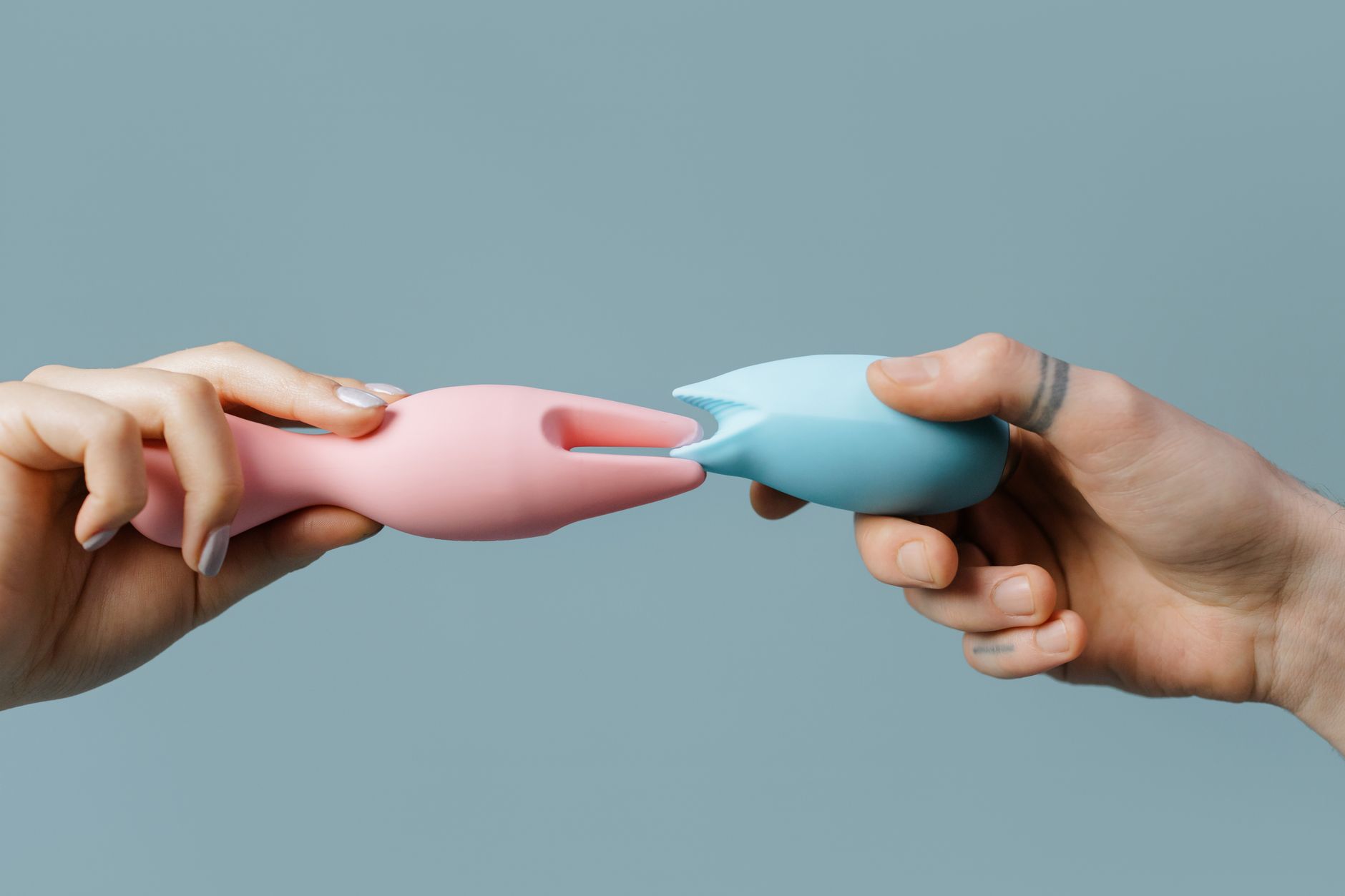
A lemon clitoral vibrator works differently than your fingers or a partner's touch because it doesn't rely on the slow buildup most people expect. Instead, it creates a pattern of stimulation that can bypass the delay and wake up sensation that feels dormant. This post walks you through how.
Why the disconnect happens in the first place
Your nervous system has two speeds: sympathetic (fight or flight) and parasympathetic (rest and digestion). Arousal lives in the parasympathetic zone. When you're stressed, anxious, or emotionally withdrawn, your sympathetic nervous system is running the show. Blood flow is being directed toward your limbs and away from your genitals. Your brain is scanning for threats instead of pleasure.
The longer this goes on, the more your body learns to ignore erotic signals. Touch becomes information instead of sensation. It doesn't feel bad exactly. It just feels like nothing.
What makes a lemon vibrator different from other clitoral vibrators is the suction mechanism. Rather than relying on vibration alone to create sensation, the lemon uses gentle pulse-and-release patterns that stimulate deeper nerve clusters around the clitoris. For someone whose surface sensation feels numb, this can feel like turning the volume up instead of just repeating the same message louder.
Start by treating it like a nervous system reset, not a performance
The first rule: remove the expectation of orgasm. I know that sounds counterintuitive, but here's why it matters. When your body is disconnected, the pressure to "finish" will keep you trapped in your head. You'll be monitoring sensation instead of experiencing it. That's the opposite of what you need.
Instead, think of the first few sessions as sensory mapping. You're not trying to get somewhere. You're trying to notice what's possible.
Start in a space where you genuinely have time and won't be interrupted. This isn't about luxury. It's about giving your nervous system permission to drop its guard. Even 20 minutes of actual privacy is better than an hour with half your attention on whether someone will walk in.
Undress completely or wear something you can move easily in. Temperature matters more than you'd think. If you're cold, your nervous system tightens. Warm skin relaxes it. A blanket, a warm room, or even a few minutes under a duvet before you start can shift things.
Use the lemon vibrator as a conversation starter with your body
Begin on the lowest setting. The point isn't intensity. It's feedback. Hold the lemon vibrator close to your inner thighs, your labia, your mons pubis. Not on the clitoris yet. You're asking your nervous system permission to move toward sensation.
Notice what you feel. Not what you think you should feel. Tingling? Numbness? Warmth? Pressure? Absence? All of those are data. Stay there for 2-3 minutes. Breathe normally. Your nervous system reads holding your breath as a threat signal.
After a few minutes, move the lemon to your clitoris. Again, the lowest setting. This is where people often tense up. You might feel the urge to rush, to make it "work," to prove your body isn't broken. Don't. Instead, focus on the sensation as information. What does the suction feel like? How does it differ from a vibrator you've used before? Does it feel sharp, gentle, concentrated, diffuse?
Stay with this for 5-10 minutes. Not because you're building toward anything, but because your nervous system needs time to recognize that this is safe. That no one is demanding anything. That you can just... feel.
When numbness starts to shift
After a few sessions of exploration without pressure, something usually changes. Sensation starts to have texture. What felt like nothing begins to feel like something. A tingle emerges. Warmth deepens. Your clitoris might start to swell slightly as blood flow returns.
When this happens, resist the temptation to speed up. Instead, use the lemon's different settings to map out what works. Try pattern 2, then 3. Some people find that a slower, pulsing pattern reconnects them faster than a constant vibration. Others need the concentrated intensity to wake up sensation at all.
Many of my clients find that pairing the lemon vibrator with mindfulness helps bridge the gap faster. That doesn't mean meditation or spiritual practice. It means anchoring your attention to physical sensation: the vibration, the warmth, the pressure, the texture of whatever surface you're on. Every time your mind drifts to performance or anxiety, gently guide it back: "What do I feel right now?"
What to do if disconnection lingers
If after 4-5 sessions over two weeks you're still not noticing any shift, something else might be at play. Medication, hormonal imbalance, depression, or deeper relationship issues can all show up as sensory disconnect. It's worth checking in with a therapist or doctor, not because something is wrong with you, but because the solution might not live in the bedroom.
If you're on antidepressants or antihistamines, for example, sexual numbness is a known side effect. That's a conversation for your prescriber, not something a lemon vibrator can fix alone. But knowing that opens the door to solutions: timing your medication differently, adjusting your dose, or exploring alternatives that don't flatten sensation.
If the disconnection is relational, a lemon vibrator can actually be a bridge back to your partner, but only if you're honest about what's happening. Using a clitoral vibrator solo when you're feeling distant from your partner isn't a substitute for addressing the distance itself. It's permission to reconnect with your own body while you figure out what you need from them.
Making it part of your routine
Once sensation starts returning, the goal isn't to depend on the lemon vibrator forever. It's to use it as a bridge back to touch generally. Over time, you might find that your body remembers what arousal feels like and becomes responsive to other forms of stimulation again.
For some people, the lemon becomes part of their regular pleasure practice. For others, it's a tool they reach for when they feel that disconnect creeping back in. Both are fine.
The key is that your body is yours to reconnect with at whatever pace works. A lemon vibrator like the one from Nancy's Lem Shop is designed to work with your nervous system, not against it. It's a tool for rewiring a sensory pathway that feels broken, not for performing pleasure you don't feel.
Your pleasure matters. And sometimes reconnecting with it takes patience, permission, and the right kind of touch.
Frequently asked questions
How long does it usually take to feel reconnected after using a lemon vibrator regularly?
It varies widely. Some people notice a shift in sensation within 2-3 sessions. Others need 2-3 weeks of consistent use before the nervous system actually relaxes enough to process arousal. If nothing has changed after a month of regular use, that's a signal to bring in outside support. A therapist or sex therapist can help identify whether the disconnection is physical, relational, or psychological. The lemon vibrator is a powerful tool, but it's not a fix-all.
Can I use a lemon vibrator if I'm taking medication that dulls sensation?
Yes, but with a caveat. Some medications, like SSRIs or antihistamines, genuinely reduce clitoral sensitivity at a neurological level. A lemon vibrator can help you work around that numbness, but it won't solve the underlying issue. Talk to your doctor about whether timing your medication differently, adjusting your dose, or switching to an alternative might help. In the meantime, the lemon can remind your body that sensation is still possible.
What if the disconnection is because of my relationship, not my body?
This is crucial. A lemon vibrator can help you reconnect with solo pleasure, which is valuable. But if the disconnect is rooted in emotional distance from your partner, a clitoral vibrator won't fix that. What it can do is give you permission to reclaim your own arousal while you address what's actually broken in the relationship. Consider working with a couples therapist alongside exploring your solo pleasure.
Is it normal to feel anxious when using a lemon vibrator if you're already feeling disconnected?
Completely normal. When your body feels absent, intentionally turning attention toward it can feel vulnerable or even triggering. Your nervous system might interpret the focus as pressure. If you feel anxiety rising, slow down. Use the lowest setting. Breathe. You can always step away and try again later. Reconnection isn't linear.
Should I tell my partner I'm using a lemon vibrator to reconnect with sensation?
That depends on your relationship and your comfort. If you're partnered and the disconnection is affecting both of you, transparency helps. You might say something like: "I've noticed I'm feeling numb, and I want to reconnect with my own body so we can reconnect together. I'm going to explore some things solo to figure out what helps." If the disconnection is private or you're working on it solo first, you don't owe anyone disclosure. Your pleasure is yours.
Can disconnection mean I've lost interest in sex permanently?
No. Disconnection and loss of interest are different. You can be interested in arousal while your body feels absent from the experience. That gap is almost always bridgeable. What matters is giving yourself time and the right tools. A lemon vibrator, therapy, rest, or a combination of all three can help rewire that connection.
Read more about reconnecting with pleasure
If you're navigating sensation shifts, check out our guide on how to use a lemon vibrator when desire drops after stress or grief. You might also find it helpful to explore why lemon vibrators feel better than traditional vibration for first-time users to understand how the design itself supports reconnection. And if the disconnection is tied to your nervous system specifically, how lemon vibrators help when you feel disconnected from your body dives deeper into the neuroscience behind what you're experiencing.